
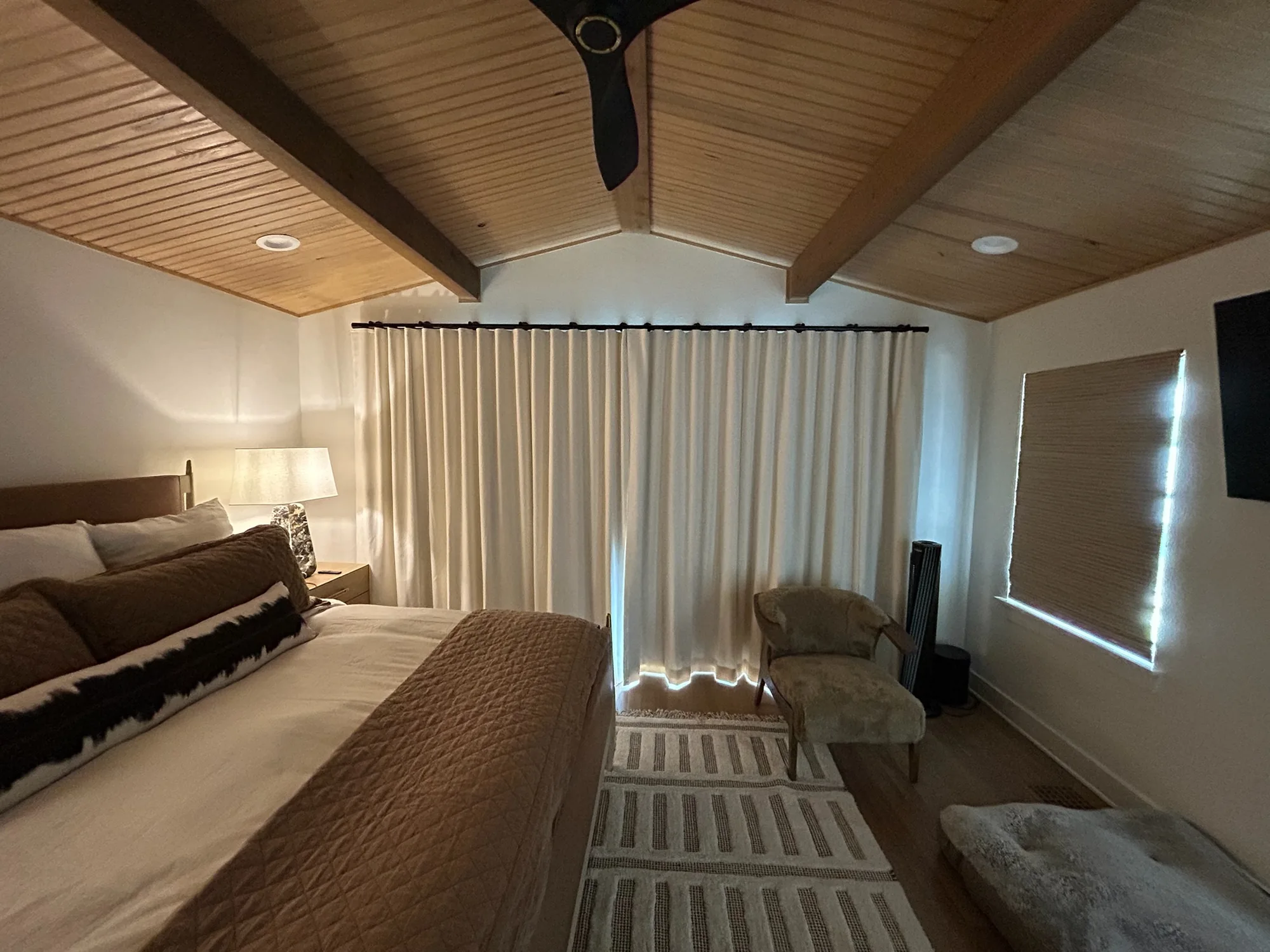
TLDR; Motorized shades are worth it on tall or hard-to-reach glass, for whole-room convenience, and for energy savings on a schedule. On small, easy windows, manual shades are the better value. Battery options avoid wiring, and most integrate with Alexa, Google, and HomeKit.
Motorized shades used to feel like a luxury. Prices have come down, battery options removed the wiring headache, and now Ben and Ashley Honeycutt at Love Is Blinds install them in ordinary North Georgia homes every week. But are they worth it for you? Here is the honest breakdown.
Where Do Motorized Shades Pay Off?
The clearest win is glass you cannot easily reach - two-story foyer windows, great-room walls, and windows behind a soaking tub or a big sofa. A remote, app, or schedule beats dragging out a ladder. Motorized window treatments shine exactly where manual ones are a hassle.
Do They Actually Save Energy?
They can. Set on a schedule, motorized shades close during peak afternoon sun in summer and open to let warmth in on winter days - trimming the load on your HVAC without you thinking about it. Pair them with insulating honeycomb shades for the biggest effect.
What Do They Cost?
Motorized shades cost more than manual because of the motor and controls, but battery-powered versions avoid the cost of wiring, and the gap has narrowed a lot. The real number depends on window size and how many you automate - an in-home quote is the only accurate way to price it.
Where Are They Not Worth It?
On small, easy-to-reach windows in a spare bedroom, manual shades usually make more sense. You do not have to motorize the whole house - most homeowners automate the windows that are genuinely hard to manage and keep the rest manual. The best mix for your home:
- Motorize - tall foyer/great-room glass, hard-to-reach windows, and whole rooms you want to move at once.
- Keep manual - small, accessible windows where reaching the shade is no trouble.
Everything is custom-measured and installed by the owners, from Dalton to the Blue Ridge mountains.