
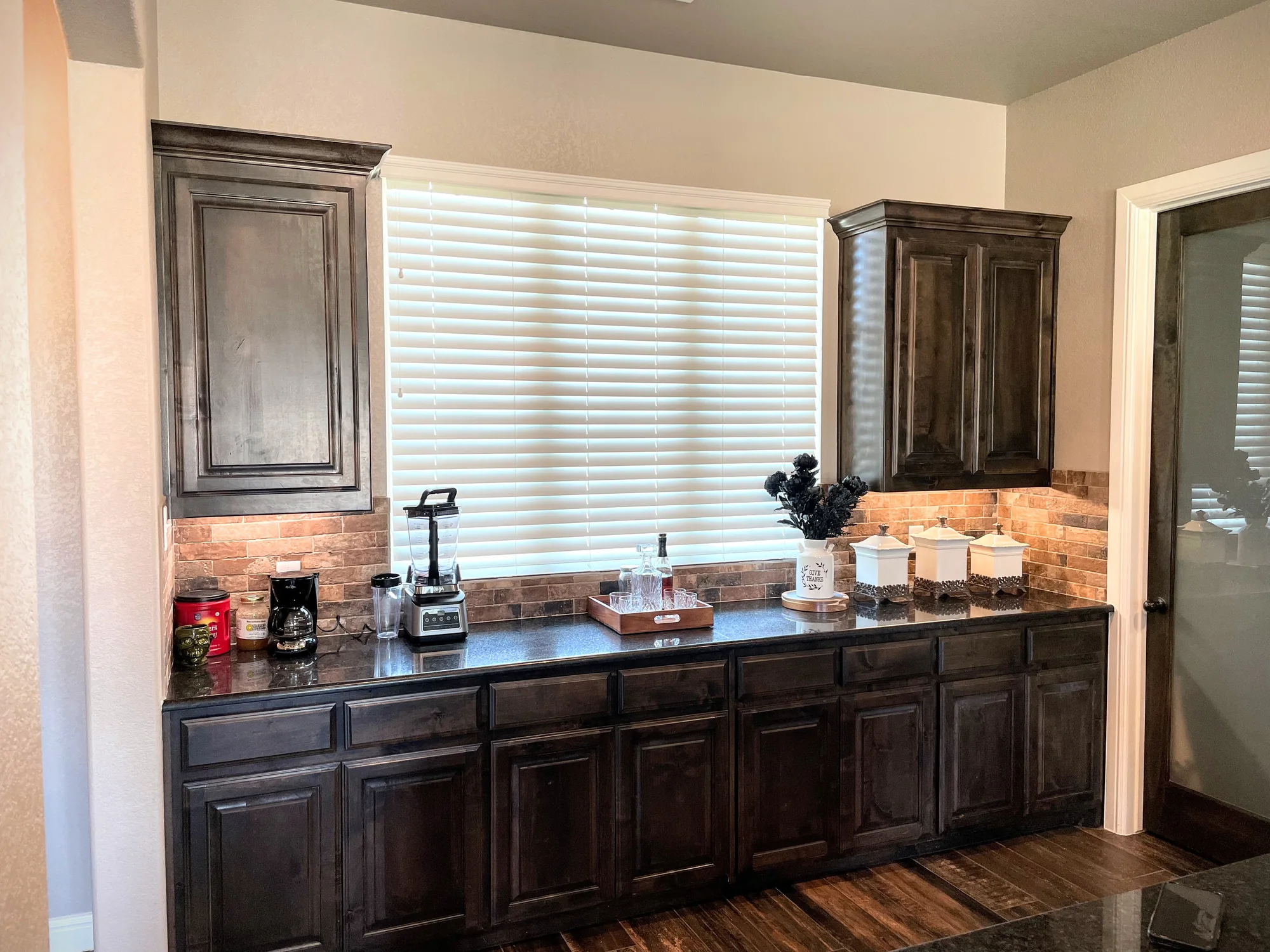
TLDR; For humid North Georgia rooms, faux wood blinds win - they resist moisture and will not warp, and they cost less. Real wood blinds look richer and feel warmer, so they shine in dry, formal rooms. Most homeowners mix the two by room.
North Georgia summers are humid, and that humidity is hard on window treatments. So when customers ask Ben and Ashley Honeycutt at Love Is Blinds whether to go with faux wood or real wood blinds, the honest answer starts with one question: which room?
How Does Georgia Humidity Affect Blinds?
Moisture is the enemy of natural wood. In a steamy bathroom or a kitchen with a hard-working stove, real wood slats can warp, swell, or crack over time. That is exactly where faux wood blinds earn their keep - they are built from moisture-resistant materials that shrug off humidity for years.
Where Do Real Wood Blinds Still Win?
Real wood is lighter, which matters on very large windows, and it has a natural warmth and grain that faux wood cannot fully copy. In dry, formal rooms - a study, a dining room, a front sitting room - real wood blinds look and feel premium. If the room stays dry, real wood is a beautiful choice.
What About Cost?
Faux wood generally costs less than real wood while delivering a very similar look. For a whole-home project on a budget, faux wood lets you outfit more windows for the same money.
The Room-by-Room Approach
You do not have to pick just one. The mix Ben and Ashley install most often across North Georgia:
- Faux wood - bathrooms, kitchens, laundry rooms, and any humid or high-traffic space.
- Real wood - studies, formal dining and living rooms, and low-humidity bedrooms.
- Either - dry bedrooms and hallways, where budget and look decide.
If humidity resistance is your top concern across the board, our guide to the best blinds for humid climates goes deeper.
Whichever you choose, everything is custom-measured and installed by the owners - no travel fee anywhere from Dalton to Calhoun to the Blue Ridge mountains.