
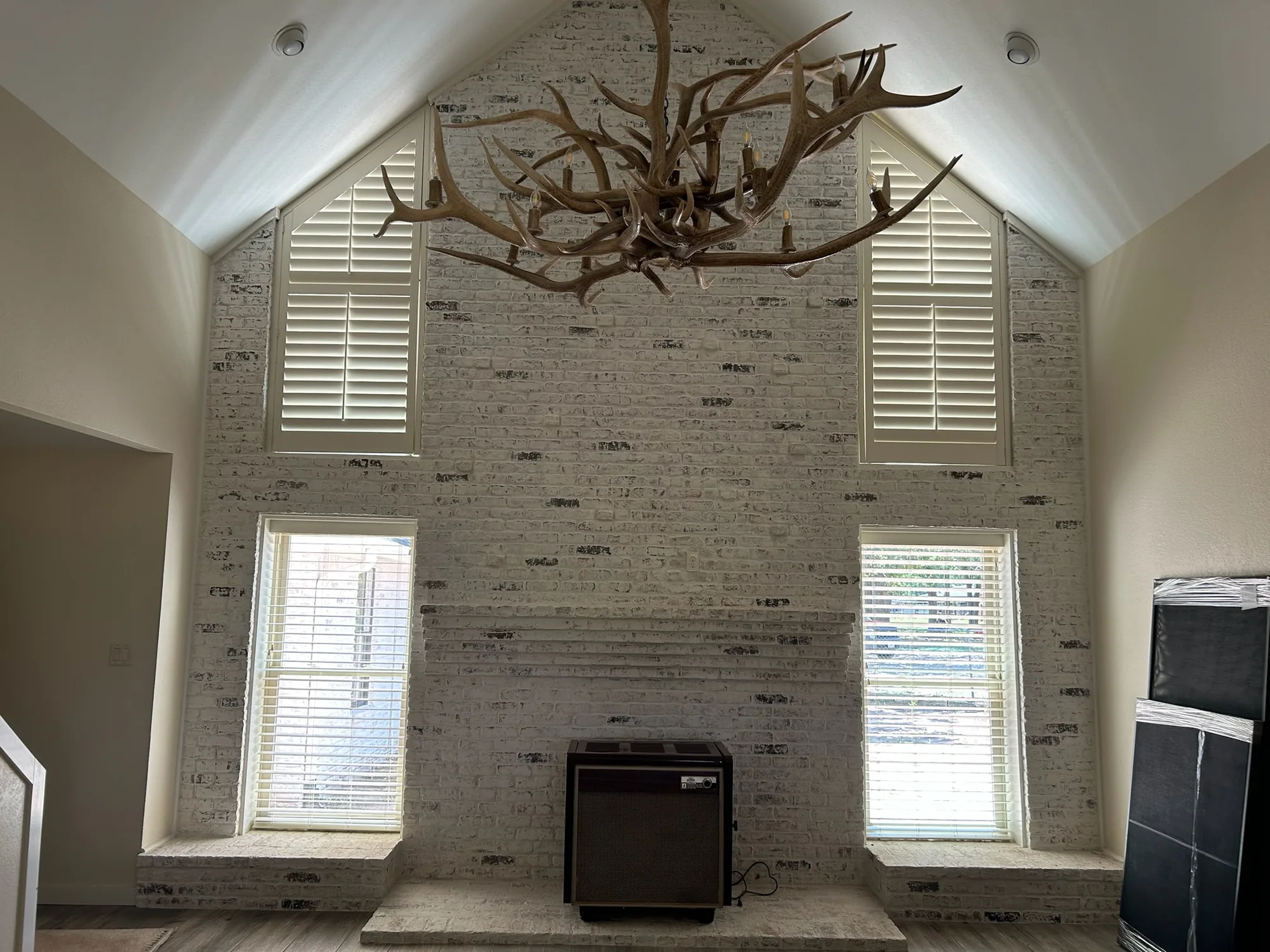
TLDR; An inside mount sits inside the window frame for a clean, built-in look and needs enough frame depth. An outside mount covers the whole opening, blocks more light, and hides out-of-square windows. Bedrooms and media rooms usually want outside mount; trimmed windows with depth suit inside mount.
Once you have picked your blinds, there is one more choice that changes how they look and how well they work: inside mount or outside mount. It sounds like a small detail, but it affects light control, how much of your trim shows, and whether the blind even fits. Here is how Ben and Ashley Honeycutt help Dalton and Rocky Face homeowners decide.
What Is an Inside Mount?
An inside mount sits within the window opening, so the blind or shade is framed by your existing trim. It gives that clean, built-in look most people picture when they imagine custom window treatments, and it keeps the sill clear for decor. Inside mounts are the popular choice for windows with attractive molding and enough depth to recess the headrail.
The catch is that an inside mount needs a reasonably deep, reasonably square frame. It also leaves small light gaps along the edges where the blind clears the frame, which matters in a room where you want total darkness.
What Is an Outside Mount?
An outside mount attaches to the wall or trim above and around the window, covering the entire opening. Because it overlaps the frame on every side, it blocks far more light and makes a window look larger. It is the go-to when a window is too shallow for an inside mount, when the opening is out of square, or when you want to hide a less-than-perfect frame.
The trade-off is that an outside mount covers your trim rather than showing it off, and it projects a little further off the wall. For most homeowners that is a fair exchange for better light control and a bigger-looking window.
How to Choose Between Them
Walk your home and ask four questions at each window:
- How deep is the frame? Most blinds need about an inch and a half of depth for an inside mount. If your frame is shallow, an outside mount is the answer.
- How dark does the room need to be? For bedrooms, nurseries, and media rooms, an outside mount blocks the edge light an inside mount leaves behind.
- Is the window square? Older homes around Dalton and Rocky Face rarely have perfectly square openings. An outside mount hides the gaps that an inside mount would put on display.
- Do you want to show the trim? If you have beautiful molding, an inside mount frames it. If the trim is plain or damaged, an outside mount covers it.
A Room-by-Room Rule of Thumb
Here is the simple version most homeowners land on:
- Living room, dining room, kitchen: Inside mount for the clean, finished look, as long as the frames have depth.
- Bedrooms and nurseries: Outside mount, or an inside mount paired with a drape, for maximum darkness and better sleep.
- Media and theater rooms: Outside mount to kill the edge light around the screen.
- Old or out-of-square windows: Outside mount to hide the imperfections.
- Shallow frames or windows with cranks and handles: Outside mount so nothing interferes.
You do not have to pick one style for the whole house. Most homes end up with a mix, inside mounts where the trim and depth allow, outside mounts where light control or a tricky frame calls for it. The look stays consistent as long as the material and color match.
Let a Pro Confirm the Fit
The mount type also changes how a window gets measured, so the two decisions go together. During a free in-home consultation, Ben and Ashley check the depth, the squareness, and the trim on every window, then recommend the mount that gives you the best fit and the light control you actually want. Because the same local team measures and installs, there are no surprises on install day, whether you are ordering custom blinds or custom shades.