
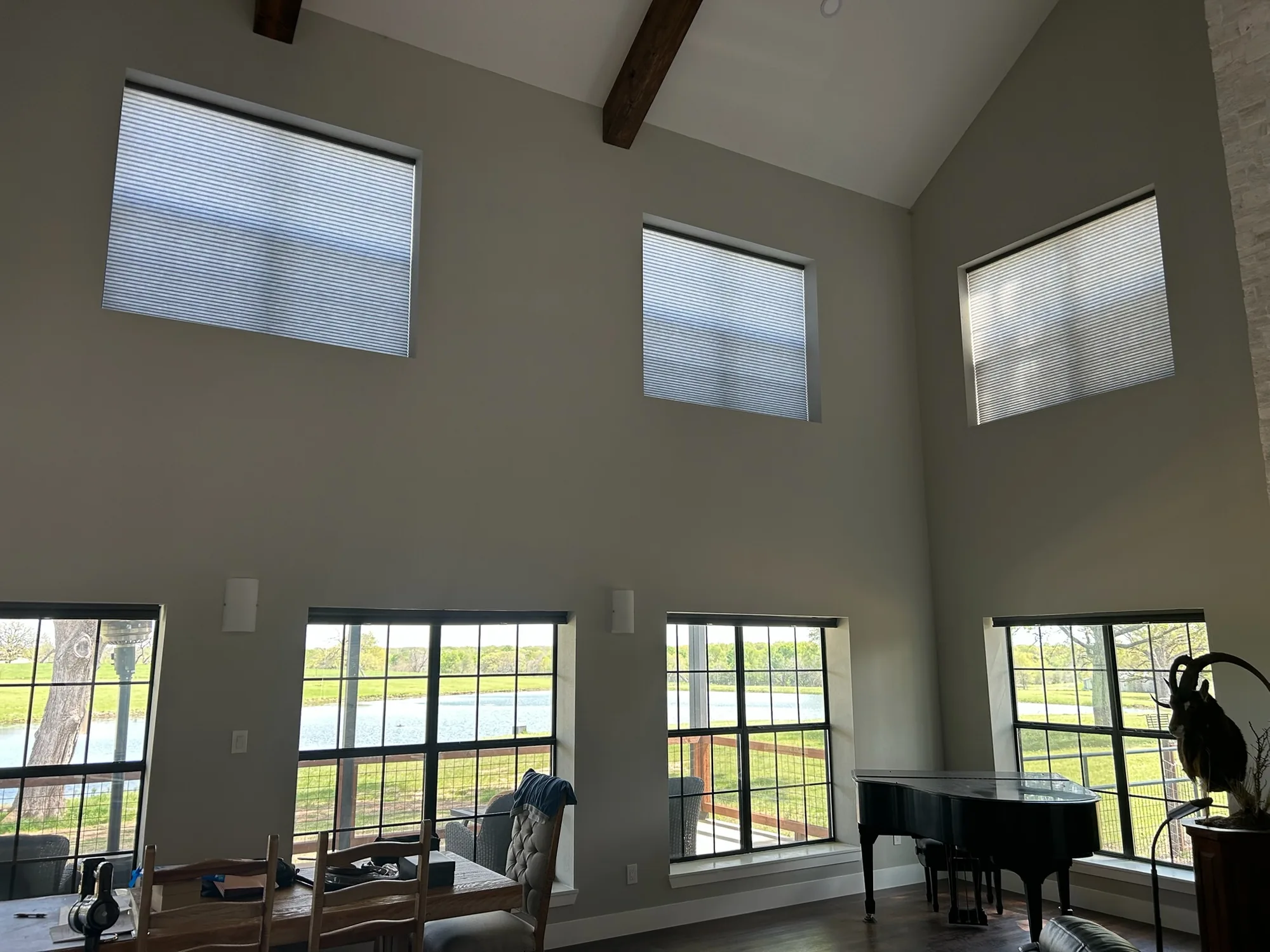
TLDR; For energy savings in Dalton, cellular shades lead because trapped air insulates in both seasons, shutters run a close second with solid-panel coverage, solar rollers win on west-facing glare, and standard blinds help mostly with direct sun. Cover the west and south faces first.
We have written before about why North Georgia homes cook in summer, and the short version is that glass is the weakest wall in the house. This post gets specific for Dalton: which treatments actually move an energy bill here, ranked, and which windows to spend on first.
First, Know Your Enemy: The Dalton Sun Pattern
Dalton summers are long, humid and bright, and the afternoon sun rides the western ridgelines straight into west-facing rooms until evening. Winters are milder but real, with cold snaps rolling off the Cohuttas that find every drafty pane in an older house. An energy answer here has to work in both directions: block radiant heat in July, hold room heat in January.
The Ranking, Honestly
1. Cellular honeycomb shades. The air pockets that give these shades their name are the whole trick: a still-air layer between the glass and the room that slows heat transfer both ways. Double-cell versions trap more air and insulate more. For bedrooms, west walls and any room that never holds temperature, this is the first thing we reach for. See the options on our Dalton shades page.
2. Plantation shutters. A closed shutter is a solid panel over the window, and it shows in winter especially. Shutters also last decades and carry resale value, so their energy benefit comes bundled with the best long-term ownership story of any treatment. Details on the Dalton plantation shutters page.
3. Solar roller shades. On a west-facing wall of glass, a solar weave cuts glare and UV while you keep the view. They are the comfort pick for living spaces where you do not want to feel bunkered in at 4 p.m.
4. Blinds. Tilted closed against direct sun, custom blinds block meaningful radiant heat, and they remain the best all-around treatment for light control. They are just not an insulator the way a cellular shade is, so we rank them by their real strength.
Spend Where the Sun Is
The biggest mistake we see is spreading a budget evenly across every window. The physics do not work that way. Two or three west-facing rooms usually account for most of the summer heat gain in a Dalton house, so cover those windows with the good stuff first. A double-cell cellular on the west bedroom beats a thin something on every window in the house, and the difference shows up in how hard the HVAC works from June through September.
Add Automation and Stop Thinking About It
An insulating shade only insulates when it is down. Motorized shades on a schedule drop through the hottest hours whether anyone is home or not, then open back up for the evening. For the tall glass in newer builds north of town, that schedule is where most of the practical benefit lives.
Get the Room-by-Room Answer for Your House
Every house wears the sun differently. In a free in-home consultation, Ben and Ashley walk your rooms, look at the exposures, and tell you which two or three windows are costing you the most, then quote the fix line by line. Book it at the contact page or call (706) 406-6653.