
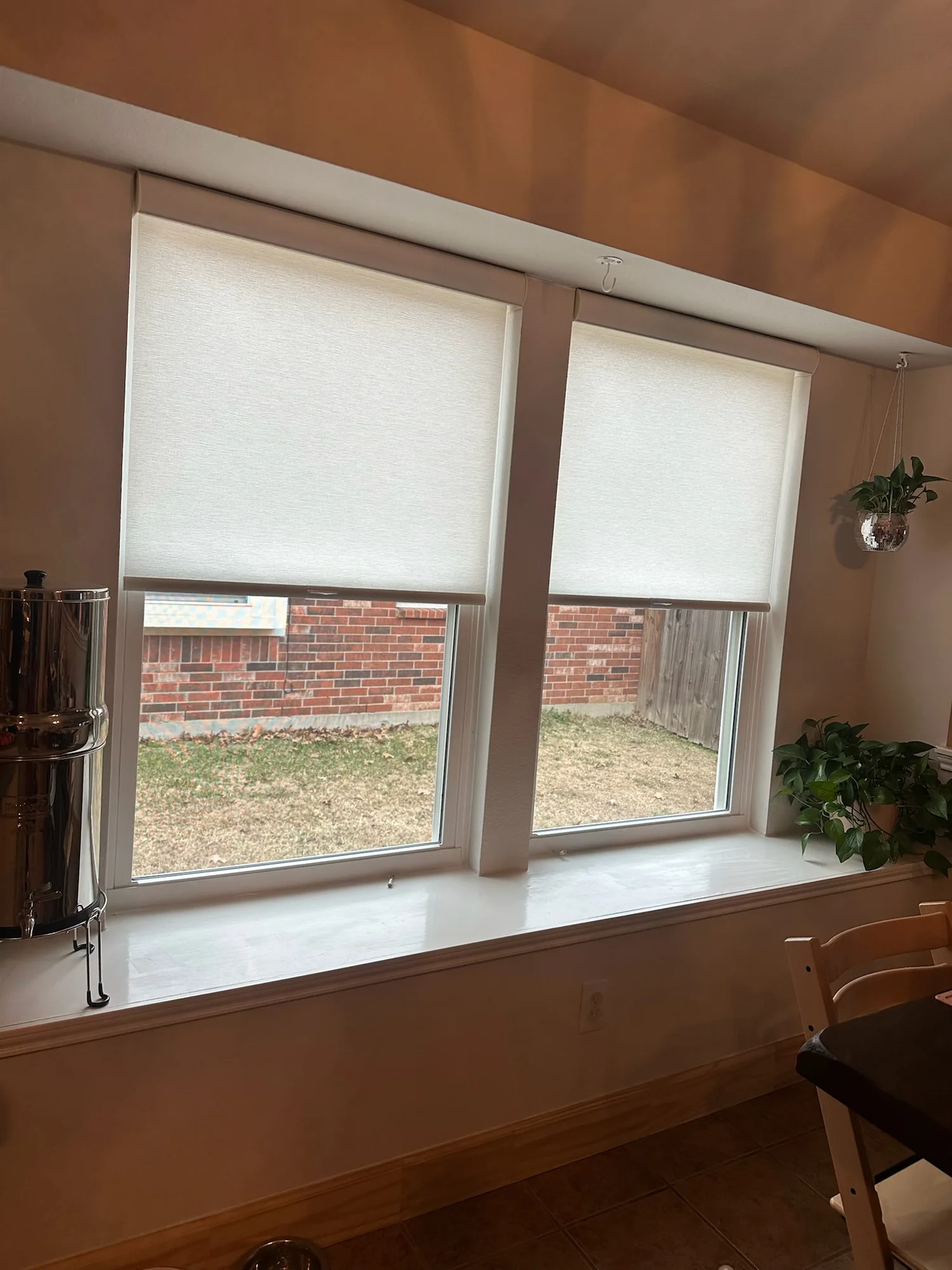
TLDR; Blackout fabric is only half the job. What actually darkens a room is the fit: an outside mount with real overlap, side channels where you need them, and a shade sized to the whole opening instead of just the glass. Blackout roller shades are the simplest fix for a day sleeper, and blackout honeycomb shades do the same thing while helping with heat. A free in-home measure is the fastest way to find the light leaks you have not noticed yet.
Dalton runs around the clock. Plenty of folks here clock out at seven in the morning, drive home in full sun, and then try to sleep while the rest of the county mows the lawn. Add a Georgia sky in early September, when the mornings are bright and the afternoon light comes in low and hard from the west, and a standard bedroom blind does not stand a chance. If you work nights in Dalton, the right custom shades are less about decorating and more about getting a full night of sleep in the middle of the day.
Why Daytime Sleep Is So Much Harder
Night sleep is easy on your windows. The sun is gone, and even a thin shade looks like it is doing its job. Daytime is the real test. Outside light is far brighter than the lamp on your nightstand, so a gap you would never notice at ten at night turns into a stripe across your pillow at ten in the morning.
Your body reads that light as a signal to wake up, no matter what time the alarm is set for. A bright bar on the wall, or a glow around the edge of a shade, pulls you out of the deep part of your sleep cycle again and again. Most shift workers we meet do not need more hours in bed. They need the hours they already have to actually count.
What Blackout Really Means
Blackout describes the fabric, not the finished window. A blackout roller shade uses an opaque fabric, usually with a backing, that stops light from passing through the material. Hold it up to a lamp and you see nothing. That part works exactly the way you would hope.
The trouble is everything around the fabric. A shade mounted inside the window frame has to be built slightly narrower than the opening so it can raise and lower without dragging. That small clearance on each side becomes a bright line when the sun hits the window straight on. Same story at the top of the roll and at the sill. Nine times out of ten, when someone tells us their blackout shade is not working, the fabric is fine and the gaps are the problem. Our guide to light filtering versus blackout roller shades covers the fabric side of the choice.
The Mount Is the Whole Ballgame
For a day sleeper, the mount matters more than the brand on the box. An outside mount hangs on the wall or trim above the window and covers the entire opening with room to spare. It gives you overlap on both sides, which is the single most effective thing you can do about light leak without any extra hardware.
An inside mount looks cleaner and shows off nice trim, so it is the right call in most rooms of the house. In the bedroom where somebody sleeps at noon, we usually make the opposite recommendation and take the coverage. If you want to know how the two compare in general, we walked through it in inside mount versus outside mount. For a shift worker bedroom, the short version is: go outside, go wide, and go tall.
When an outside mount is not possible, side channels are the next step. These are thin tracks that run down each side of the window and capture the edge of the shade so light cannot sneak past. They need to be measured with the shade, not added later.
Picking the Right Blackout Shade
Once the mount is settled, the product choice comes down to what else the room needs to do:
- Blackout roller shades. The simplest and cleanest option. One flat piece of opaque fabric, a tidy roll, and nothing to catch dust. Best for a bedroom where light is the only real problem. See roller shades.
- Blackout honeycomb shades. The cell structure traps a layer of air right at the glass, so you get darkness plus help with heat. This is our usual pick for a west-facing bedroom. See honeycomb shades.
- Dual shades. A light filtering layer and a blackout layer on one headrail. Useful if you share the room with someone on a normal schedule, or if you want daylight on your days off without swapping anything out.
- Layering with drapery. A blackout shade underneath and a heavier panel over the top catches the last bit of edge light and softens the room. It is the most forgiving setup on an odd-shaped window.
All of these are custom made to your openings, which is what lets us build in the overlap instead of hoping a stock size works out.
Little Things That Wreck a Dark Room
After the shade is up, a few details still decide whether the room reads as dark or almost dark:
- Light bouncing off a wall. A bright wall opposite the window spreads whatever gets in. Deeper paint colors in a shift worker bedroom go a long way.
- The gap under the door. Hall light matters more than people expect at two in the afternoon.
- A second window nobody treated. A small bathroom or closet window that connects to the bedroom will undo the good work on the main window.
- Charging cords and standby lights. Once the windows are handled, these are suddenly the brightest thing in the room.
- Waking up to raise the shade. If you have to get out of bed to change the light, you will stop bothering. Motorized shades on a schedule solve this quietly, and we cover the options on our motorized shades in Dalton page.
Getting It Measured Right the First Time
A blackout order has less margin for error than a normal one, because the whole point is that nothing gets past. That means the width of the overlap, the depth of the headrail, the position of any handle or crank, and the amount of trim you have to mount on all need to be right before anything is built.
That is what the free in-home consultation is for. Ashley and I come out, laser measure every opening, and look at where the sun actually lands during the hours you sleep. We install what we sell, so if a shade needs to sit an extra inch wider to kill a light leak, that call gets made on your wall instead of in a warehouse somewhere. We do this all over Whitfield County and the towns around it.