
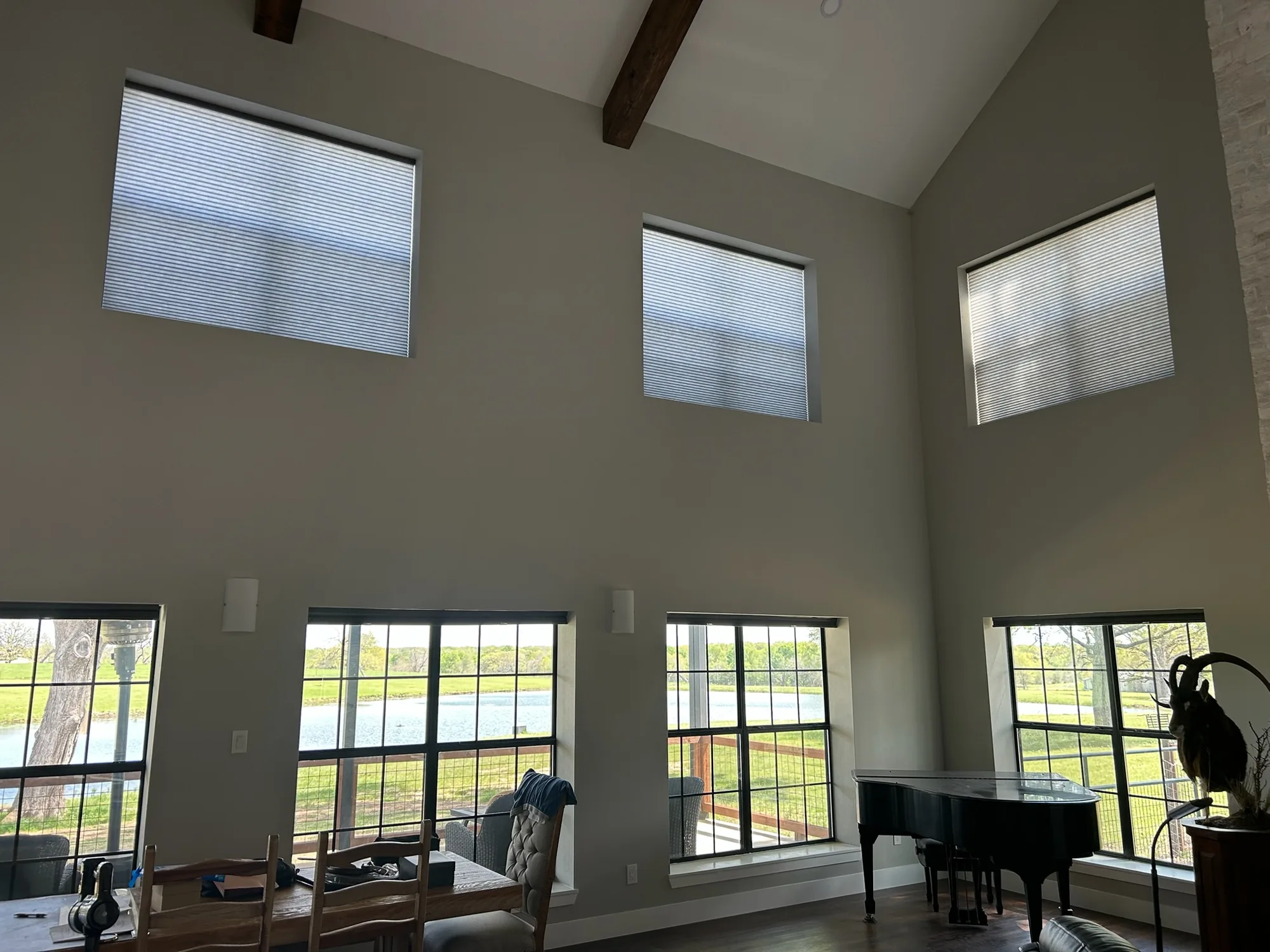
TLDR; Condensation is indoor humidity meeting cold glass - treatments neither cause nor cure the humidity. Shades make the glass surface colder behind them, so on sweating single-pane windows, raise them for part of the day and let the glass dry. Fix the moisture source, insulate the glass, protect the sills.
Every November the calls start: cold snap hits, and suddenly the kitchen windows are fogged solid at breakfast and the sills are wet by noon. People ask whether new shades will fix it, and this is one of the places we would rather be straight than make a sale: treatments interact with condensation, but they neither cause the moisture nor cure it. Here is what is actually happening and the routine that protects your windows.
What the Fog Is
Condensation is simple physics: the air inside your house carries moisture from showers, cooking, laundry and lungs, and when that air touches a surface cold enough - on a 28-degree North Georgia morning, that is the glass - the moisture drops out as fog and droplets. Single-pane windows, which half the older homes around Dalton still carry, run coldest and sweat first.
The Honest Part About Shades
A closed insulating shade keeps room heat on your side of it - that is the point, and your heating bill thanks it. The flip side: the glass behind the shade runs colder, so on sweat-prone windows, mornings can look worse behind a closed cellular. Neither fact makes shades wrong; it makes a routine right: closed at night for warmth, opened in the morning so air reaches the glass and dries it. A motorized schedule does this automatically, which is the least glamorous and most practical automation we sell.
Attack the Moisture, Not the Symptom
- Run the fans. Bath fans through the shower plus twenty minutes; kitchen vent while pots boil.
- Mind the humidifier. Winter comfort settings often overshoot what cold glass can tolerate.
- Open the house briefly on mild days - November still offers them here.
- Watch the sills. Pooling water, lifting paint or dark spotting means escalate - that is a humidity problem outrunning the windows.
Where Treatments Genuinely Help
Insulating cellular shades keep the room comfortable and the heating bill sane while you manage moisture at the source - the winter half of our energy guide. Moisture-proof materials matter too: in the kitchens and baths where humidity lives, faux wood shrugs off the damp that warps real wood, per the sink-window rules. And if old single-pane windows sweat no matter what, treatments sized to allow airflow beat ones sealed tight to the glass.
Straight Answers at the Table
Bring the foggy-window question to the free consultation and you will get the honest version for your specific house - including, sometimes, that the fix is a fan and a routine, not a product. Ben and Ashley would rather earn the trust than the quick order. Book at the contact page or call (706) 406-6653.