
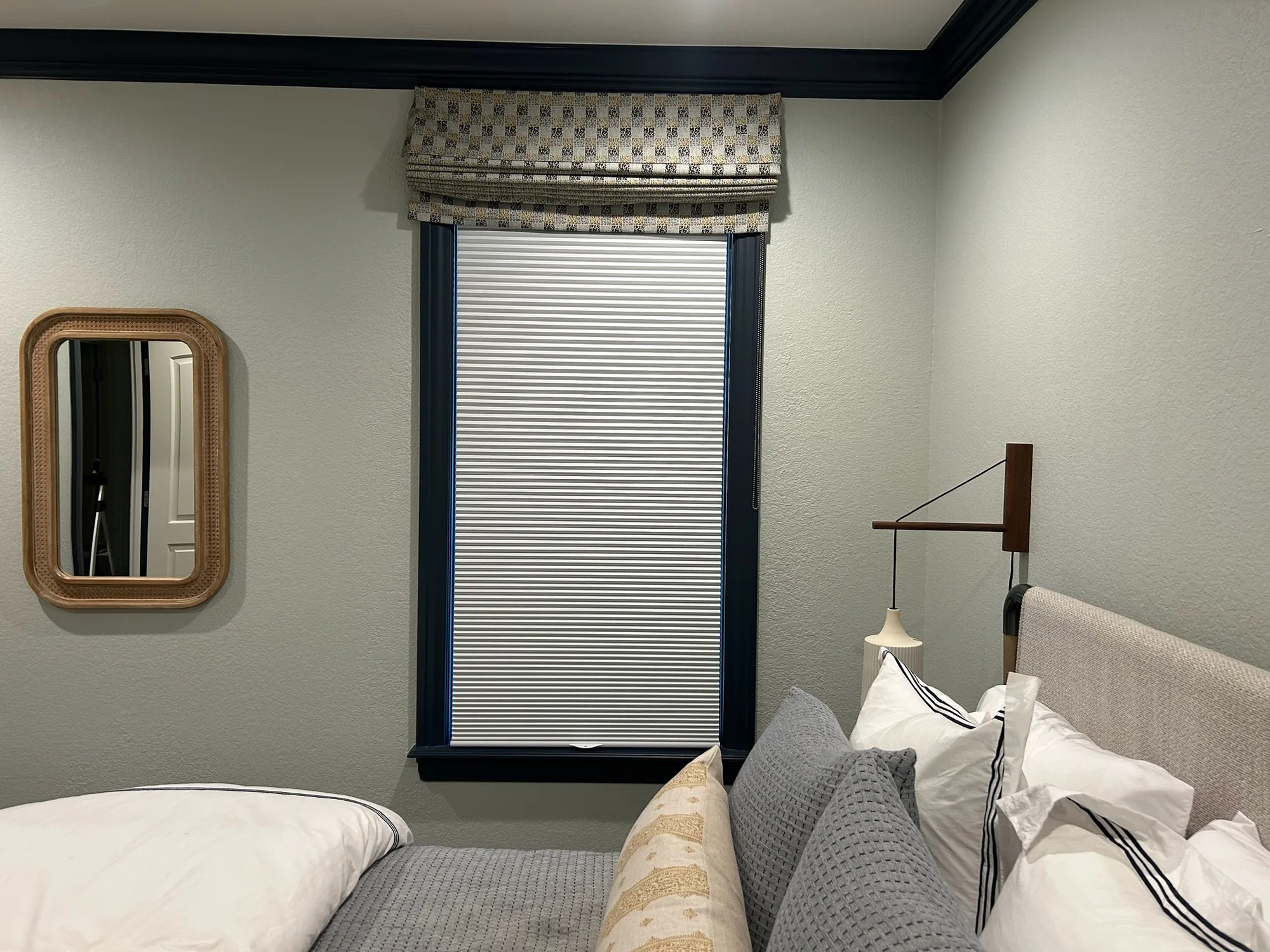
TLDR; Better sleep at the window comes from three moves: a true blackout fabric, an outside mount that kills the edge glow, and an insulating cell that steadies the room temperature and softens noise. Shift workers and nursery windows deserve all three.
Sleep science keeps repeating the same three villains: light, noise and heat. All three come through the bedroom window, which makes the window treatment the cheapest sleep upgrade in the house. Between the early sunrises, the streetlights and the carpet mills running shifts around Dalton, we spec sleep windows constantly. Here is the setup that works.
Start With True Blackout
Room-darkening dims; blackout blocks. For anyone sensitive to light, a child, a shift worker, anyone sleeping past dawn, the difference is the whole game. Blackout cellular shades and blackout rollers stop light at the fabric itself. We covered the shift-work case in depth in our Dalton shift workers guide; the short version is that fabric labeled blackout should mean a dark room at noon.
Kill the Halo
The most common complaint about blackout shades is the glowing outline around the edges, and it is a mounting problem, not a fabric problem. An inside mount needs clearance to operate, and light slides through that clearance. The fix is an outside mount that overlaps the opening by a couple of inches on every side. For total darkness, layer a drape over it and the room goes cave-dark.
Let the Cells Quiet the Room
A honeycomb shade's trapped-air pockets do three sleep jobs at once: they darken, they soften outside noise at the glass, and they steady the room's temperature so a west-facing bedroom does not start the night ten degrees warm. One treatment, three fixes, which is why cellular shades are our default answer in bedrooms.
The Nursery Standard
Everything above goes double for a nursery, plus one non-negotiable: cordless operation. No dangling cords anywhere a crib or a climbing toddler lives. Cordless blackout cellulars are the standard spec, and naps improve the week they go up.
Fall Is the Test Season
Early fall sun rides lower and sneaks past treatments that handled summer fine. If September mornings are waking the house an hour early, the bedroom windows are telling you what they need before the clocks change and scramble everyone's schedule further.
Fix the Sleep Windows First
If the budget covers only a few windows, make them the sleeping rooms. Ben and Ashley will measure every bedroom in one free visit, bring blackout samples to hold against the glass, and quote it line by line. Book at the contact page or call (706) 406-6653.